A factory can buy precision cameras, robotics, and a new production line. What it cannot quickly buy is the trained eye that knows when a tiny scratch, fold, contaminant, or misalignment will become a failed phone, car component, or battery.
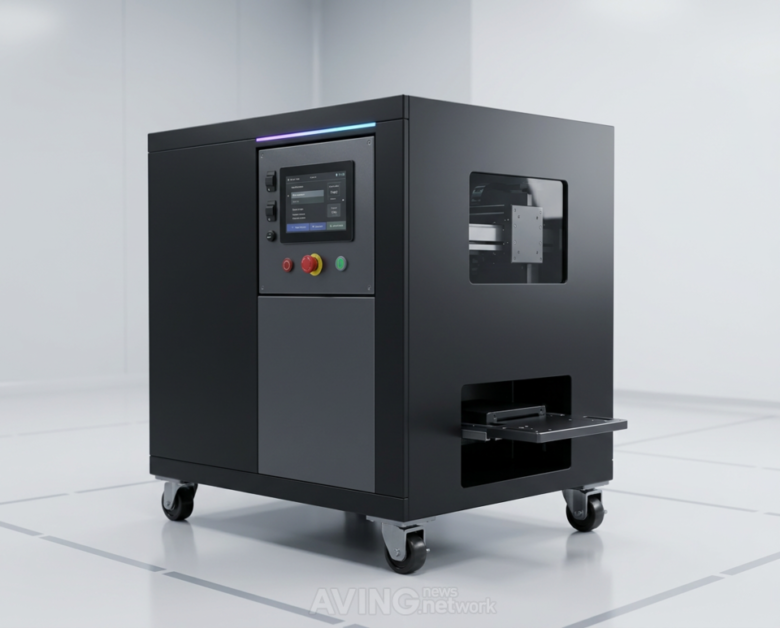
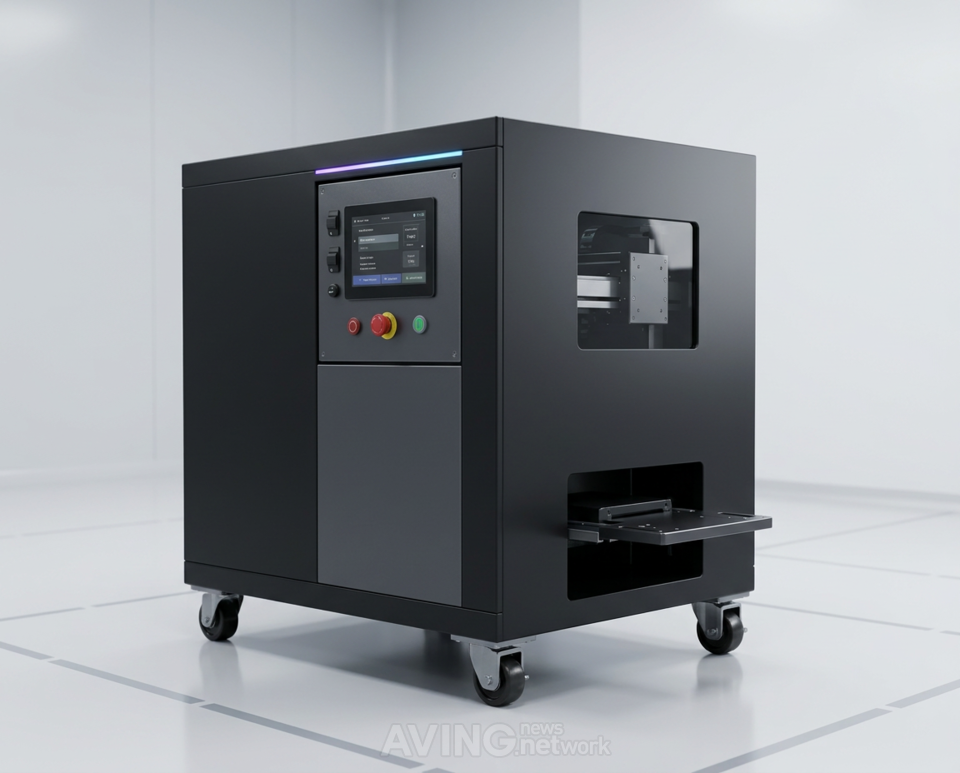
That is the opportunity A.I.MATICS is chasing with AIM-T1, an AI-powered visual-inspection platform for high-precision electronics. The company says a factory quality engineer can set up a new inspection task from just three to five good product samples, rather than collecting a large defect-image dataset, calling in an AI specialist, or rebuilding a dedicated inspection cell. It’s the robotic version of “this is what good looks like.”
If that promise holds up, it could make advanced manufacturing easier to expand and move, in addition to potentially reducing costs to the consumer! New factories would still need skilled people, but their quality teams could carry more of the inspection know-how in software to help manufacturers bring new products online faster, at the highest quality.
Manufacturing capacity and manufacturing expertise do not grow at the same speed. A 2024 Deloitte and Manufacturing Institute study projected that U.S. manufacturers could need as many as 3.8 million additional workers by 2033, with up to 1.9 million jobs potentially left unfilled. High-precision inspection is only one part of that workforce challenge, but it is one that can directly affect yields, product launches, and warranty costs. After all, every single product needs to go through inspection.
I met A.I.MATICS AI Lab Specialist Jaewon Lee in person in Seoul, and asked where this sort of inspection fits on a production line. He said it can run before or after functional testing, depending on the factory’s workflow. In the company’s current Vietnam use case, it is inspecting flexible PCBs and camera-related components for defects including scratches, contaminants, folding damage, exposed copper, and alignment issues (a big deal for cameras).
AIM-T1 is not a general-purpose inspection camera that magically understands every manufactured object. It is designed for compact, high-precision electronics parts, where very small visual defects can matter and the product can fit within the inspection cell. Larger boards or trays of parts may be possible, Lee said, but would require a configuration matched to the size, volume, and camera angles of the product.
Traditional machine-vision systems tend to be taught what to look for through hand-set rules or large collections of labeled defect images (create an inventory of all the problems seen so far). If a new part is introduced, a manufacturer may need new images, a revised inspection program, and sometimes different hardware.
A.I.MATICS calls its alternative software-defined inspection, which implies a for flexible, smart, approach. Rather than asking an operator to gather examples of every possible flaw, the company says its model uses several known-good samples as a baseline and flags deviations from that baseline. It describes the approach as “World Model AI” and “in-context learning,” terms that should be treated as the company’s product framing rather than independently established proof of a technical advantage.
In plain English, the idea is closer to placing a known-good part next to the part being judged than to teaching a system a catalog of [bad] scratches in advance. That could be useful for unusual defects, because the system would not necessarily need a prior labeled example of the exact flaw.
Great, but the key performance indicator is whether it can do that without creating too many false alarms, which can slow a factory just as surely as a missed defect can.
The optical design is the other half of the pitch. A.I.MATICS uses multiple cameras and lighting configurations, plus a liquid lens that electronically changes focus instead of moving a camera on a mechanical Z-axis (depth axis).
The company says it uses focus stacking to inspect surfaces with height variation in one cycle, allowing the system to remain compact. Its website claims 12 μm inspection precision and detection of particles as small as 3 μm.
A.I.MATICS says an operator can select reference samples, review the normal baseline formed by the system, and deploy the inspection task through a “drag-and-teach” workflow. The company says this reduces a new-product setup from roughly 72 hours to about four hours. That claim depends on the product, the inspection criteria, and the factory’s process, but the target is clear: move product changeovers from outside integrators and AI specialists to the line’s own quality engineers.
An initial AIM-T1 version is operating on a connector-assembly line at an electronics manufacturing site in Vietnam. The company reports up to 75,000 inspections per day, a 26% productivity increase, and a 0.01% defect-escape rate in that deployment (see A.I.MATICS LinkedIn post).
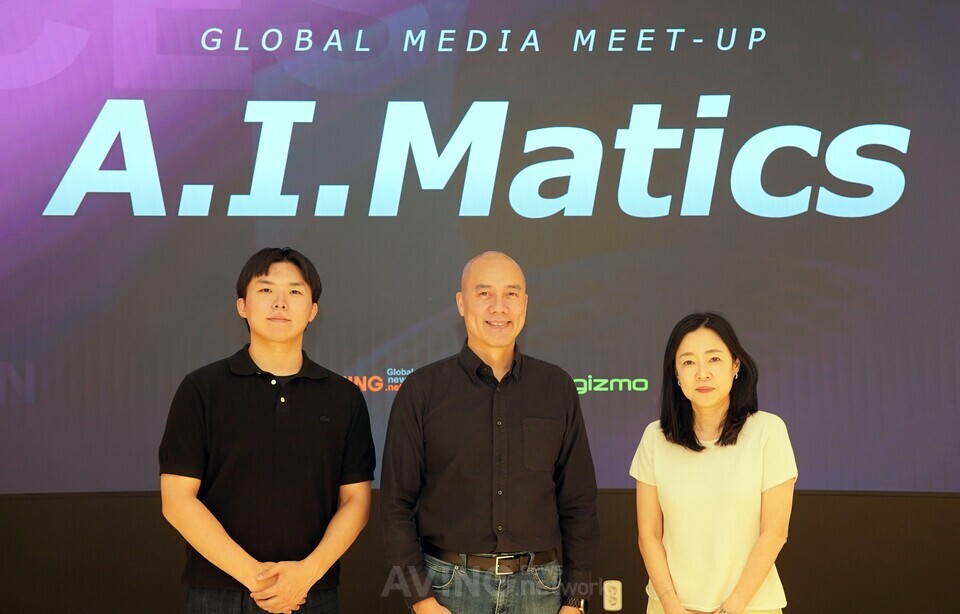
Ubergizmo Editor-in-Chief Hubert Nguyen, A.I.MATICS AI LAB Specialist Jaewon Lee, and officials take a commemorative photo after concluding the Global Media Meetup. | Photo by AVING News
The company has experience in vision systems beyond the factory. A.I.MATICS began as a Hyundai Motor Group in-house venture in 2000, became an independent company in 2003, and later evolved from PLK into A.I.MATICS. It built road-image-recognition systems for Hyundai and Kia before expanding its on-device vision-AI work into driver safety and now manufacturing.
What is interesting here is whether a system can make frequent product changes less dependent on scarce specialists, without lowering quality. If AIM-T1 can repeatedly deliver its claimed setup speed, false-call control, and defect detection across diverse production environments, it could become valuable infrastructure for manufacturing right when this sector explodes due to AI, datacenters and global repositioning.
Factory AI That Learns From Good Parts, Not Defect Photos
, original content from Ubergizmo. Read our Copyrights and terms of use.